Showing posts with label medical breakthroughs. Show all posts
Showing posts with label medical breakthroughs. Show all posts
Trans Nasal Surgery Used to Remove a Woman's Tumor
Wednesday, November 18, 2009


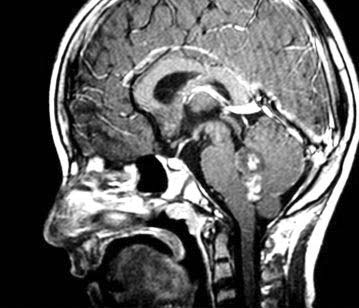
For three years, a host of doctors were unable to diagnose Manju Talwar’s medical problem. The 24 year old school teacher complained of abnormal lactation, irregular menstrual cycles and was unable to conceive.
All symptoms suggested a possible gynaecological problem but despite heavy medication, Talwar’s condition did not improve. However, early this year, a MRI scan revealed a tumour in her pituitary gland.
The pea-sized gland situated at the base of the brain controls growth, metabolism and reproductive functions among others. In Talwar’s case, the tumour was pressing her optic nerve, which could lead to blindness. She was advised immediate surgery.
Talwar’s was not an easy surgery as while removing the tumour we had to ensure that the gland is preserved as she is in the child bearing age,” said Dr. Deepu Banerji, a neurosurgeon at Wockhardt Hospital,Mulund,Mumbai.
The Pituitary gland which is located at the center of the brain manufactures and secretes hormone that regulate growth ,sexual development and fluid balance in the body.
Pituitary adenomas(tumors) are abnormal growth on the pituitary glands which account for about 10% of intracranial neoplasms. They often remain undiagnosed, and small pituitary tumors have an estimated prevalence of 16.7% (14.4% in autopsy studies and 22.5% in radiologic studies). Tumor removal is usually done through transspheoidal approach. Endoscopic surgery is the new approach allowing a surgeon to gain maximum access within the narrow confines of the region avoiding extensive dissection.
Surgery is a common treatment for pituitary tumors. Trans-sphenoidal adenectomy surgery can often remove the tumor without affecting other parts of the brain. Endoscopic surgery has become common recently.
Surgery is a common treatment for pituitary tumors. Trans-sphenoidal adenectomy surgery can often remove the tumor without affecting other parts of the brain. Endoscopic surgery has become common recently.
Dr Deepu Banerji, who operated on Talwar over three months, opted for a relatively new endoscopic trans-nasal technique for the delicate operation. This involved insertion of an endoscope through nasal cavity.
Banerji claimed that so far in Mumbai most doctors have been using microscopic transeptal technique, which involves a microscope inserted through the nasal cavity. This, he claimed has led to post-operative complications like numbness around nose and lips, nasal deformity or pain and incomplete removal of tumor.
In the new technique, an endoscope provides good view of the tumor to the doctor. Also, it makes it easier to differentiate between the tumor and the gland – leading to greater chances of complete tumour removal and preserving hormonal functions.
Talwar said she has so far not complained of any post-operative complications.For inquiries please contact us at enquiries@wockhardthospitals.net
Wockhardt Hospitals Medical Breakthroughs in Bone and Joint Care
Monday, June 8, 2009

Our Bone and Joint care at Mumbai and Bangalore has been a center of ,excellence in Joint Replacements and Orthopedic Treatments.Our Bangalore and Mumbai centers are equipped to treat all types of muscular-skeletal problems ranging from Orthopedic Trauma Surgery to Minimally Invasive Arthroscopic Surgery. The hospital also specializes in surgery for joint replacements, sports medicine, ligament repair, knee surgery, spine surgery and physical therapy for rehabilitation.
Wockhardt Hospitals Bone & Joint Care has complete technology and advanced skills to perform Microscopic Lumber & Cervical Discectomy, Endo-scopic Spine Surgery and Arthroscopic surgeries such as Ligament Reconstruction in the knee, Subacromial Decompression in the shoulder.
Some of our Medical Breakthroughs in Bone and Joint Care include
1)We were the first hospital chain in Western India to perform Hip Resurfacing or Surface Replacement
2)We are the first hospital in India to perform mobile bearing Hi-flex Uni Knees (Half Knee Replacement )
3) Wockhardt Hospital was among the first Hospital to have performed India's first bilateral knee replacement surgery. In a bilateral knee replacement, both the knees are replaced in the same surgery which is performed on the same day.
4)Among the first Hospital to have performed India's first Birmingham Hip resurfacing: Unlike a total hip replacement (THR), the BIRMINGHAM HIP resurfaces the joint. The worn cartilage and damaged first layer of bone are removed and a fresh, low-wearing metal surface is installed.
5)Doctors at Wockhardt Hospitals was successful in treating 'synovial chondromatosis'where 98 small pieces of loose bones, ranging from 5 mm to 40mm, in the Knee Joint removed from a 60 year old woman.
to schedule an appointment with our Bone and Care doctors,please email us at enquiries@wockhardthospitals.net
11 month Orissa baby undergoes Double switch heart surgery to get a new life at Wockhardt Hospitals, Bangalore
Friday, May 8, 2009

The Pediatric cardiac team at Wockhardt Hospitals has written a new chapter in the history of Pediatric Heart Surgery in India. An 11 month old baby girl from Orissa has become a rare case to be successfully operated for Congenitally Corrected Transposition of Great Arteries (CCTGA) which occurs in less than 1% of children born with heart defects. The Pediatric cardiac team at Wockhardt Hospitals led by Dr. Devananda, Consultant Cardiac Surgeon successfully completed this six hour surgery on the little baby without any complications.
Baby Pinky (name changed) who is the second child in the family was observed to have breathing difficulty in her second month and upon consultation with the local doctors in Orissa they were referred to Bangalore for further consultation and treatment. The family visited a couple of renowned hospitals in Bangalore but the hospitals had no surgical solution to offer and refused to operate upon the child due to the complexity of the case. That is when the child was brought to Wockhardt Hospitals.
The diagnosis by the doctors at Wockhardt Hospitals revealed that the baby was born with ventricular septral defect and straddling tricuspid valve. In this case the pumping chambers (ventricles) are switched along with the great arteries (aorta and pulmonary artery). The baby also had a large hole in between the ventricles and encroaching of one of the valves across the hole. Children born with this kind of defect might also have abnormal electrical conduction system which means they might be highly susceptible to a complete heart block.
Explaining the case Dr. Devananda, Consultant Cardiac Surgeon, Wockhardt Hospitals said, “This is one of the rarest cases we have observed in congenital heart defects where the chambers along with the arteries were in the reversed position. Since it was a complex case we had to perform three cardiac procedures on the baby in one sitting. First we had to do the closure of the VSD (ventricular septal defect) in such a way that the encroachment of the valve should not hamper the blood flow. Secondly, we redirected the pure and impure blood to the respective normal ventricles (atrial switch) and thirdly we switched the great arteries to the respective ventricles (arterial switch).” This complex condition is seen in less than 1% of all children born with heart defects.
The baby can lead a normal life and will not require any further surgical treatment” said Dr Devananda. The treatment was done at a subsidized cost at the hospital and was supported by the Needy Heart Foundation.
Rare Primitive Neuroectodermal CancerousTumour Successfully Removed
Wednesday, February 25, 2009
A team of 10 doctors at Wockhardt Hospitals Bangalore led by Dr. Shabeer Ahmed, Minimal Access Surgeon, Wockhardt Hospitals, successfully removed a cancerous tumor involving the abdominal aorta of a 19 year old girl, after a 7 hour long surgery. Saleema (name changed) travelled all the way from Jaipur to undergo the surgery at Wockhardt Hospitals,Bangalore to remove Primitive Neuroectodermal Tumour (PNET), a tumor that originates in cells from the Primitive Neural Crest. This cancerous tumor which involving abdominal aorta is a rare case in the medical history and there have been no reports found on such a rare tumor in the medical literature (reference – Cochrane Library –an international medical library, a collection of databases in medicine and other healthcare specialties provided by the Cochrane Collaboration and other organizations).
Most PNET’s occurs in the brain, extremities, pelvis, chest wall and mediastinum. This is the first quoted instance where a PNET was found in the abdomen involving the Bifurcation Abdominal Aorta. Surgical removal is usually a big challenge and it becomes more when it involves big vessels like the aorta – the big vessel which carries purified blood from heart to other organs.
Generally PNET is a rare tumor, usually occurring in children under 10 years old belongs to the Ewing family of tumors.The Ewing family of tumors is a group of cancers that includes Ewing tumor of bone (ETB or Ewing sarcoma of bone), extraosseous Ewing tumors (EOE tumors), primitive neuroectodermal tumors (PNET or peripheral neuroepithelioma), and Askin tumors (PNET of the chest wall). These tumors all come from the same type of stem cell.
During the surgery it was observed that the tumor had spread through the left-ureter, common aorta, bifurcation and the tumor was excised en-bloc along with the aorta.
According to Dr. Shabeer Ahmed, Minimal Access Surgeon, Wockhardt Hospitals, “Most PNET’s occurs in the brain, extremities, pelvis, chest wall and mediastinum. This is the first quoted instance where a PNET was found in the abdomen involving the Bifurcation Abdominal Aorta. Surgical removal is usually a big challenge and it becomes more when it involves big vessels like the aorta – the big vessel which carries purified blood from heart to other organs.”
Subscribe to:
Posts (Atom)
AddThis


 Posts
Posts

